
· by Michael Blair, Nashville's Masonry
Plenty of brick houses around Nashville wear a color their owners never chose, and the wish to make it darker, browner or more even comes up often. The quick answer most people reach for is paint. The one we usually steer them toward is a masonry stain, and the reason is not the color. It is what each one does to the wall in the winters that follow.
What is the difference between brick stain and paint?
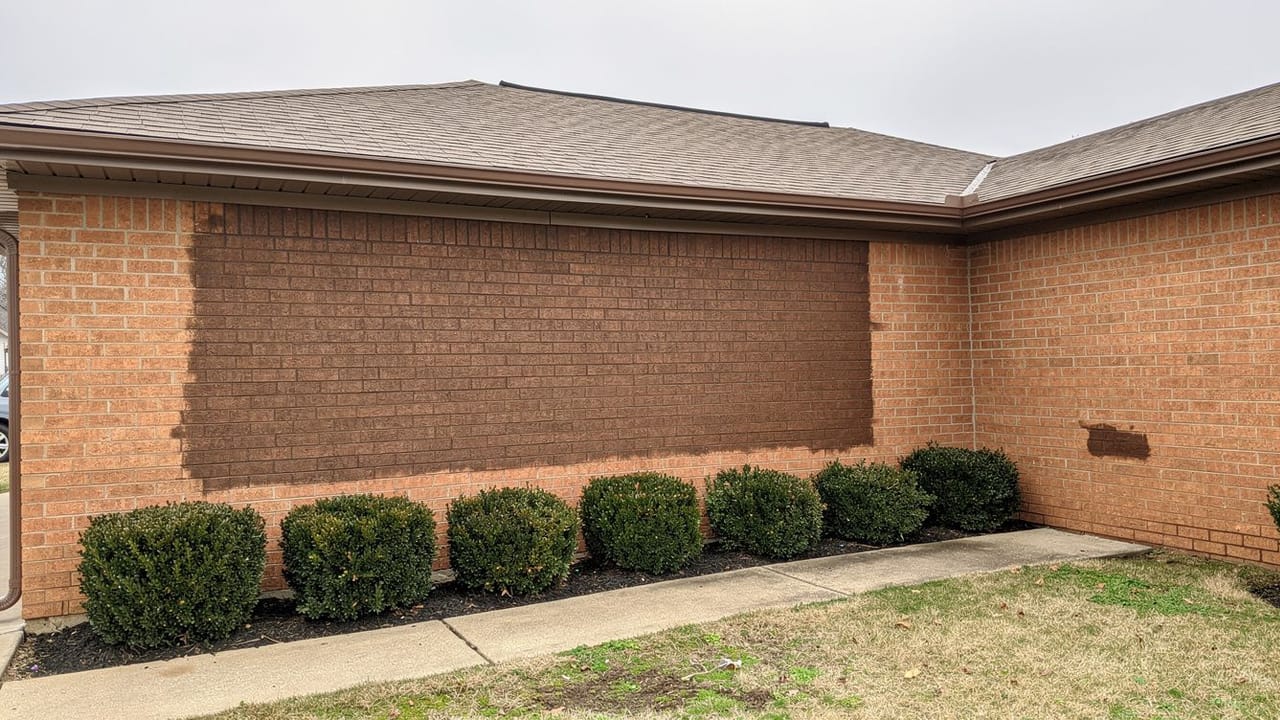
A stain soaks into the brick and colors it from within the face, while paint dries as a film on top. The Brick Industry Association’s Technical Note 6, Changing the Appearance of Brick Masonry, says masonry stains depend on absorption into the pores of the brick and leave its texture as it was. Acrylic latex paints, it says, form a film and are usually rated only semi-permeable to water vapor.
Mineral stains go a step further. Dyebrick’s technical information describes its water-based stain reacting with the masonry to form an insoluble silicate bond rather than a coat on the surface, and says the brick’s permeability stays almost unchanged. The BIA note says mineral-based stains are generally preferred for their high vapor permeability. In practice, stained brick still looks and feels like brick, and painted brick looks like a painted wall.
Why does it matter whether a brick wall can breathe?
A brick wall gets wet and has to dry out, and a coating that slows the drying keeps water in the brick. The BIA note says most deterioration of brick masonry comes from moisture problems that were never dealt with, and that a treatment can make it worse by trapping moisture in the wall. It asks that any exterior treatment let moisture evaporate, counting anything over 10 perms as vapor permeable and 1 to 10 as semi-permeable.
The National Park Service’s Preservation Brief 1 explains the damage. Water held inside masonry can freeze and cause spalling and cracking, and waterproof coatings, a group it says includes some elastomeric paints, shut out water vapor along with liquid water. Middle Tennessee winters cross the freezing mark again and again, which is the cycle behind brick faces popping off.
Can you stain brick that has already been painted?
No, a stain needs open brick to soak into, so any paint or sealer has to come off first. The BIA note says treatments already on the masonry, sealers and water repellents included, generally have to be removed before a new one goes on, and Dyebrick’s answers to common questions say its stain is not suitable for masonry that has been painted or sealed with a water-proofer.
Getting the paint off is the hard part. The BIA note warns that paint is hard to get off brick without harming it, which is one reason we would rather talk an owner out of painting than help undo it later. Clear sealers raise the same problem, and our post on sealing brick covers why we rarely recommend one.
Some brick will not take a stain even when it is bare. Glazed brick cannot be stained because its face does not absorb, and the note adds that some dense unglazed brick will not accept a stain either. That is why it calls for a water test on the brick before any staining starts.
How long does brick stain last?
A good masonry stain should last for decades without upkeep, which is the main thing it has over paint. The BIA note says masonry stains need no maintenance and points to stains still performing after 20 years or more, while painted exterior brick can need repainting on a regular cycle, depending on the paint. It is careful to add that stain products are proprietary and do not all perform equally.
For that reason the note recommends applicators with at least three years of experience staining brick of the type and scale of the job, offering a warranty of 15 years or more. Those are fair things to ask anyone who offers to stain your house, us included.
Getting the color right before the whole wall is done
The color is chosen on the wall, not from a chart. The BIA note calls for mock-ups or sample panels before the work, and on a wall laid in a blend of brick colors it wants the samples to take in the whole range. Preservation Brief 1 says a test area can start as small as six square inches and should be judged only once the masonry has dried completely.
Preparation matters as much. The note has the brick clean and dry, efflorescence removed and watched for a return, new or repaired mortar given at least 30 days to cure, and at least 24 hours of drying after cleaning. It also describes stains being used to blend new or repaired masonry into the wall around it, which is how we finish a brick repair where no brick on the market matches. If your brick is in Franklin or nearby and you want it a different color, ask us to look at it, and we will test a patch first.
Sources
- Brick Industry Association, Technical Note 6, Changing the Appearance of Brick Masonry (2024) — Stains rely on absorption and keep texture; latex paint forms a semi-permeable film; moisture is the main cause of deterioration; over 10 perms permeable; old treatments removed first; glazed and some dense brick cannot be stained; stains lasting 20 years or more; three years of experience and a 15-year warranty; mock-ups; 30-day mortar cure and 24-hour drying
- National Park Service, Preservation Brief 1: Cleaning and Water-Repellent Treatments for Historic Masonry Buildings — Trapped water can freeze and cause spalling and cracking; waterproof coatings, including some elastomeric paints, seal out vapor; test areas from six square inches, judged dry
- Dyebrick, Technical Information — Stain forms an insoluble silicate bond with the masonry and no film; permeability virtually unaltered
- Dyebrick, Product Questions — Not suitable for masonry previously painted or sealed with a water-proofer; not for wet brickwork; trials first
FAQ
Staining Brick Instead of Painting It — questions
Can brick stain make brick lighter?
Yes, within limits. The Brick Industry Association’s Technical Note 6 says stains can lighten or darken individual brick, the mortar joints or a whole wall. Because a stain is absorbed rather than laid on top, it keeps the brick’s texture, and a sample patch on your own wall is the only reliable way to see how far it will go.
Can you stain the mortar joints too?
Yes. The Brick Industry Association’s Technical Note 6 says mortar color can be changed along with the brick, or the stain can go on the brick units alone and leave the existing mortar as it is. Either way, the joints should be part of the sample patch, judged dry, before the whole wall is done.
What kind of brick cannot be stained?
Glazed brick cannot be stained, because its face does not absorb, and the Brick Industry Association notes that some dense unglazed brick will not take a stain either. Brick that has been painted or sealed has to be stripped first. A water test on the wall shows whether the brick absorbs enough for a stain to work.
How long should new mortar cure before staining?
At least 30 days, according to the Brick Industry Association’s Technical Note 6, which also wants the brick clean and dry, efflorescence removed and at least 24 hours of drying after any cleaning. We wait out the full period after repointing or a brick repair before any stain goes on the wall.
Is painting brick bad for the house?
Paint does not ruin brick by itself, but it changes how the wall dries. The BIA says acrylic latex paints are usually only semi-permeable to water vapor and that painted exterior brick can need regular repainting. Where moisture is trapped behind a coating and freezes, the National Park Service warns of spalling and cracking.