
· by Michael Blair, Nashville's Masonry
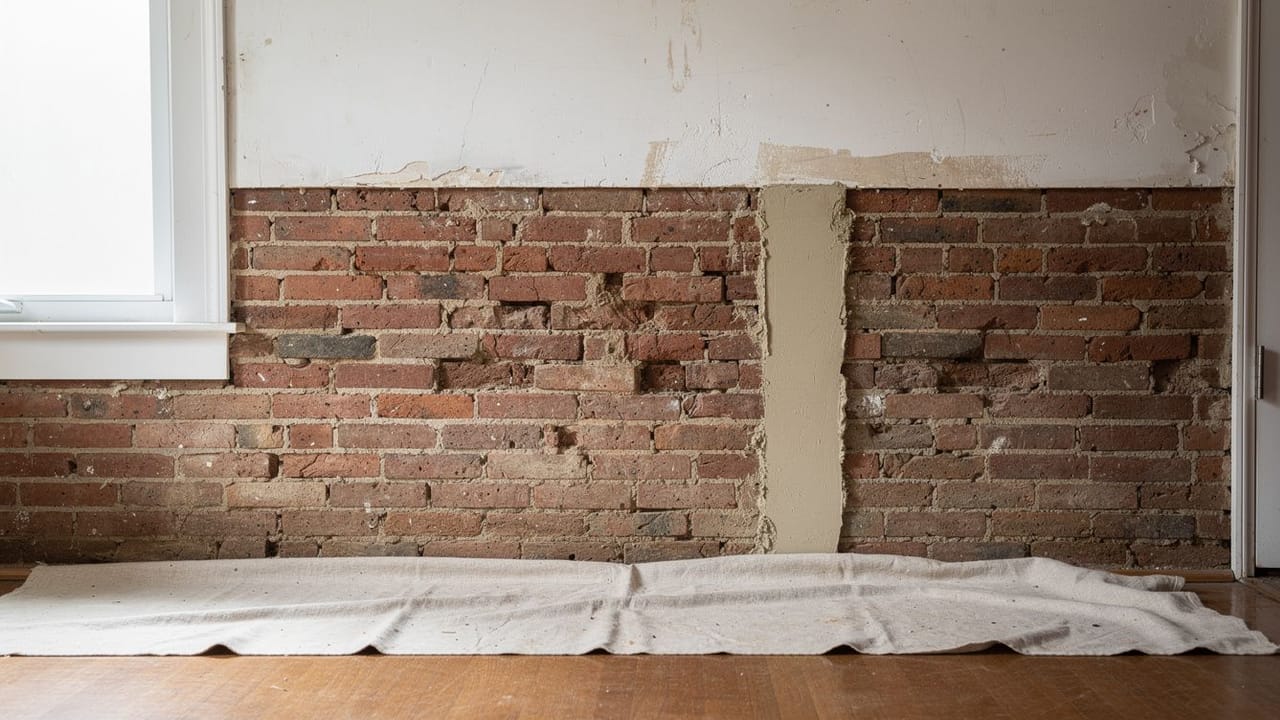
In the older houses around Nashville, a chimney breast or a party wall often has brick under the plaster, and owners want to see it. Sometimes the brick is beautiful. More often it is a wall that was laid to be covered: softer brick, uneven joints, and patches nobody expected anyone to look at again.
How the plaster comes off decides what the wall looks like afterward, and most uncovered walls need brick repair and repointing before they are finished. Here is what is under the plaster, the cleaning methods that ruin it, the repointing it needs, and the question of whether to seal it.
What is under the plaster on an interior brick wall?
Under the plaster on most interior brick walls is brick that was laid to be covered, and it is usually softer and rougher than the brick on the outside of the house. The National Park Service says so plainly in Preservation Brief 6 on the dangers of abrasive cleaning: the brick inside a wall tends to be softer, and lower in quality, than the brick laid on the outside. The same brief warns that stripping the plaster tends to reveal wide, open joints, odd bricks and old patches that nobody intended to be seen.
So the first step on any of these jobs is to open a small test patch, a couple of square feet in an inconspicuous spot, before committing the whole wall. It shows how hard the brick is, how deep the joints are open, and whether the face is sound enough to leave bare.
Can you sandblast plaster and paint off interior brick?
Sandblasting plaster or paint off interior brick does more harm than good, and the Park Service brief says it is not acceptable for the interiors of historic houses. Blasting strips the hard outer face of soft brick, leaves the surface rough, and lodges grit in the woodwork around it. The brief notes the wall that results may then need repointing that is often difficult to match.
The brief’s alternative is the gentlest method that works. For plaster that means taking it off by hand, working carefully so the brick faces are not chipped, and then washing off what remains with low-pressure water and a natural bristle brush, never a metal one, as the brief recommends for dirt.
Paint brings a second question. If the house was built before 1978, the EPA’s Renovation, Repair and Painting program requires anyone paid to disturb painted surfaces there to be certified in lead-safe work practices, because that work can create dangerous lead dust. The rule generally does not cover owners working on their own home, but the EPA still recommends hiring a certified contractor.
How is an interior brick wall repointed?
An interior brick wall is repointed the same way as an exterior one: the loose mortar is raked out to sound material and replaced with a mortar softer than the brick. The Park Service’s Preservation Brief 2 on repointing mortar joints sets the rule that matters most: new mortar should be softer, measured in compressive strength, than the masonry it goes into, so that any movement cracks the joint rather than the brick. It also calls for joints to be cut back to a depth of two to two and a half times their width.
Inside, that rule carries more weight, because soft interior brick is exactly the kind a hard Portland cement mortar damages. A high-lime mortar matched to the old joint in color and texture is usually the answer. Power saws cut fast, but the brief warns that on walls with thin joints, as most brick walls have, they almost always damage the brick edges, and soft brick suffers most. On interior brick the raking is mostly done by hand. How a repointing job runs step by step, outside or in, is in our post on how repointing should be done.
Should an exposed interior brick wall be sealed?
An exposed interior brick wall should be sealed only if it keeps shedding dust after it is cleaned and repointed, and even then with care. Preservation Brief 6 says a bare interior wall may need a clear coating to stop the brick and mortar from dusting, but warns that a sealer can change the brick’s color and can make moisture problems worse by slowing the evaporation of water vapor from the face.
That second point matters most on an exterior wall or a chimney breast, where moisture moves through the brick. A wall that stays damp or shows white salts should be dried out at the source before anything goes on its face, the same reasoning as in our post on sealing brick and why it backfires. A wall that is dry, sound and well repointed often needs nothing at all.
If you are thinking about uncovering brick in an older house in Nashville or nearby, ask us to look at it before the plaster comes down, and we will open a test patch and tell you what the wall is likely to need.
Sources
- National Park Service, Preservation Brief 6: Dangers of Abrasive Cleaning to Historic Buildings — Interior brick usually softer and of poorer quality than exterior brick; removing plaster exposes joints and repairs never meant to show; abrasive cleaning not acceptable in historic interiors; sealers may change color and trap moisture; gentlest means possible
- National Park Service, Preservation Brief 2: Repointing Mortar Joints in Historic Masonry Buildings — Repointing mortar softer in compressive strength than the masonry; joints raked to 2 to 2-1/2 times their width; power saws almost always damage brick at thin joints
- U.S. EPA, Lead Renovation, Repair and Painting Program — Anyone paid to disturb painted surfaces in pre-1978 homes must be certified in lead-safe work practices; the rule generally does not apply to owners doing their own work
FAQ
Exposing and Repointing an Interior Brick Wall — questions
How do you remove plaster from a brick wall?
By hand, working carefully so the soft brick faces are not chipped, then washing the residue off with low-pressure water and a natural bristle brush. The National Park Service advises against abrasive blasting on interiors because it damages soft brick and leaves a wall that is hard to repoint.
Why is interior brick crumbling to dust?
Interior brick is usually softer and of poorer quality than exterior brick, according to the National Park Service, because it was laid to be plastered over. Once the plaster comes off, the soft faces and open joints can shed dust. Gentle cleaning, repointing with a soft lime mortar and, only if needed, a breathable sealer address it.
Is it OK to seal an interior brick wall?
It can be, if the wall keeps dusting after it is cleaned and repointed. The National Park Service warns that a sealer can change the brick’s color and trap moisture by slowing evaporation from the face. A dry, sound, well repointed wall often needs no sealer, and a damp one should be dried out first.
What mortar is used to repoint old interior brick?
A mortar softer than the brick, usually high in lime and matched to the original in color and texture. The National Park Service’s brief on repointing says new mortar must be softer in compressive strength than the masonry, so any movement cracks the joint and not the brick. Hard Portland cement mortar can damage soft interior brick.
Do you need a lead-safe contractor to uncover brick in an old house?
If the house was built before 1978 and the work disturbs painted plaster, the EPA requires anyone paid to do it to be certified in lead-safe work practices. The rule generally does not apply to owners working on their own home, but the EPA recommends hiring a certified contractor because the work can create lead dust.