
· by Michael Blair, Nashville's Masonry
Mortar is the sacrificial element in a masonry wall — softer than the brick, so movement and moisture damage the joint rather than the unit. That principle is what makes using the wrong mortar so damaging.
Why joints erode
Water is the mechanism. It enters the joint, freezes in a Middle Tennessee cold snap, expands and breaks the surface a little more each cycle.
Our climate gives enough freeze-thaw events to do this steadily without ever being severe, so erosion is gradual and easy to ignore until it is deep.
The hardness trap
Older Nashville brick is soft and porous. Modern Portland cement mortar is much harder and less permeable than the lime mortars those walls were built with.
Repointed with a hard mix, moisture that used to escape through the joint is forced through the brick instead. It then spalls the face off the brick in freeze-thaw, which is unrepairable.
- Match the mortar to the brick, not to convenience
- Soft historic brick needs a lime-based mix
- Joint profile should match the original
- Rake out to about twice the joint width
- Never grind wider than the joint, it damages brick edges
What good repointing looks like
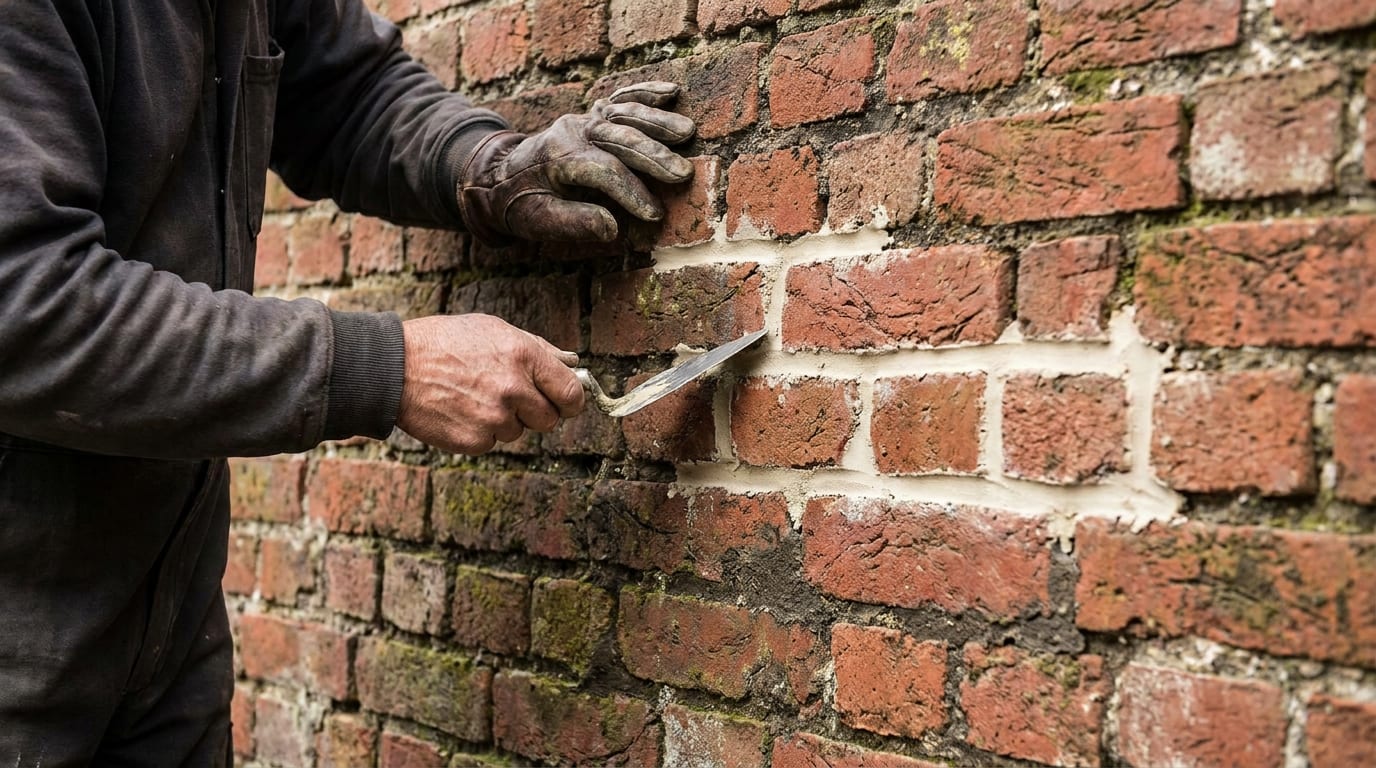
Joints raked out to roughly twice their width so the new mortar has depth to hold, cut carefully rather than ground indiscriminately, and packed in layers.
The finished profile should match what was there. A struck joint replaced with a flush one changes how the wall sheds water and how it looks.
Where to look first
Below windows, at the base of walls, under a leaking gutter, and on the elevation that takes driving rain — usually south and west here.
Concentrated erosion in one area almost always points at a water source above it rather than at the mortar itself.