
· by Michael Blair, Nashville's Masonry
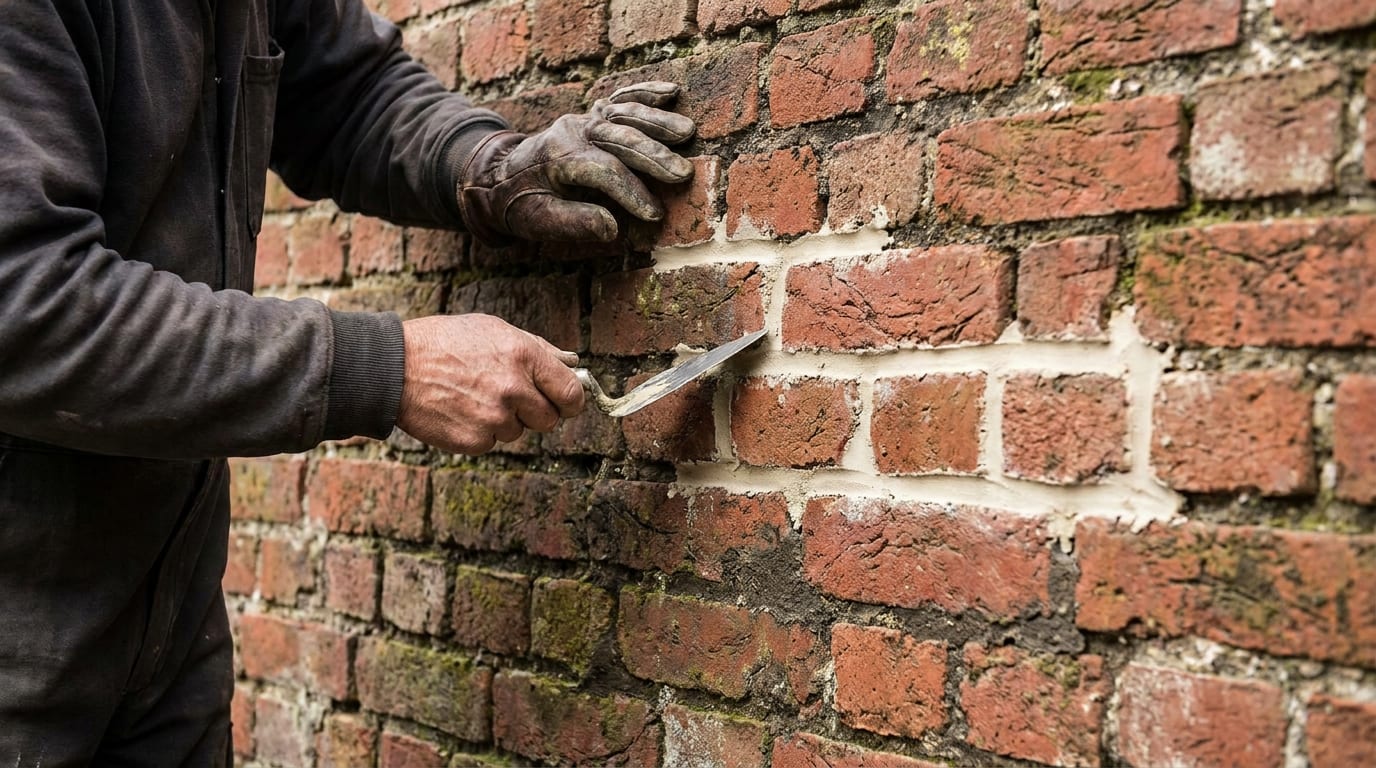
Mortar is not glue that dries. It cures by a chemical reaction with the water mixed into it, and that reaction slows to a crawl in the cold and stops if the water freezes. Early fall in Middle Tennessee is close to ideal for masonry: mild days, cool nights, none of the August heat that dries joints too fast. Then late October or early November brings the first frost, the nights start dipping below freezing, and the calendar for mortar work gets shorter. Knowing where that line sits helps you decide what to book now and what can wait.
What cold does to fresh mortar
Freshly laid mortar is full of water. If it freezes in the first day or two, the water expands in the joint, breaks the young bond to the brick and leaves a joint that looks fine but is weak and crumbly and can be scratched out with a key a few months later. The damage cannot be fixed by warming the wall afterward. The work has to come out and be done again.
Cold that stays above freezing does less harm but still matters. Curing slows, the mortar stays soft longer, and a hard rain in that window can wash the joints and stain the brick. The standard practice across the masonry industry is that special cold-weather measures begin once air temperatures fall below 40 degrees Fahrenheit, not only once they reach freezing.
What a careful mason does in November
Materials are kept dry and off the ground, and brick with ice or frost on it does not go into a wall. Sand and water may be warmed so the mortar starts out warm. Fresh work is covered before the crew leaves with insulated blankets or tarps and kept covered for the first days while it gains strength, and on a larger job in a cold snap the work area may be enclosed and heated.
What a careful mason does not do is reach for antifreeze. Masonry standards and mortar manufacturers generally rule out antifreeze admixtures, and accelerators containing chloride are a problem of their own, because they corrode the steel ties, anchors and lintels inside the wall. If a quote in December mentions an additive to beat the cold, ask what it is.
- No frozen or frosted brick or block laid
- Mortar materials kept dry and above freezing
- New work covered and protected for the first days
- No antifreeze or chloride additives in the mix
Lime mortar and historic brick
Repointing old soft brick with a lime-based mortar, which is the right material for much of the pre-war housing in East Nashville, Germantown, Edgefield and Sylvan Park, is even more sensitive to cold. Lime mortar gains strength slowly by drawing carbon dioxide from the air, a process that takes weeks and needs mild, damp conditions to go well. A freeze during that time does the same harm it does to cement mortar, over a longer window.
That is why restoration masons tend to finish lime repointing by mid-fall and pick it up again in spring. If your house needs repointing and it is a lime job, September and early October are the weeks to get it done. If that window has passed, spring is usually the better choice than pushing into the cold.
What to do now and what can wait
Some things should not wait for spring. A cracked or missing chimney crown, a chimney without a cap, loose brick at the top of a chimney or a parapet, and a rusted lintel that is lifting the brick above a garage door all let water into the masonry. Water in masonry through a winter of freeze-thaw cycles is how spalled faces and failed joints multiply. Those repairs, or at least a sound temporary cover, belong before the cold.
Cosmetic repointing on a sound wall, new garden walls, and decorative work can wait for a warmer season without harm. When we look at a job this time of year, the question we ask is whether the problem gets worse over the winter. If it does, it gets done or protected now. If it does not, it waits for weather that lets the mortar cure properly.